When to Choose Foggy Glass Replacement Over Repair
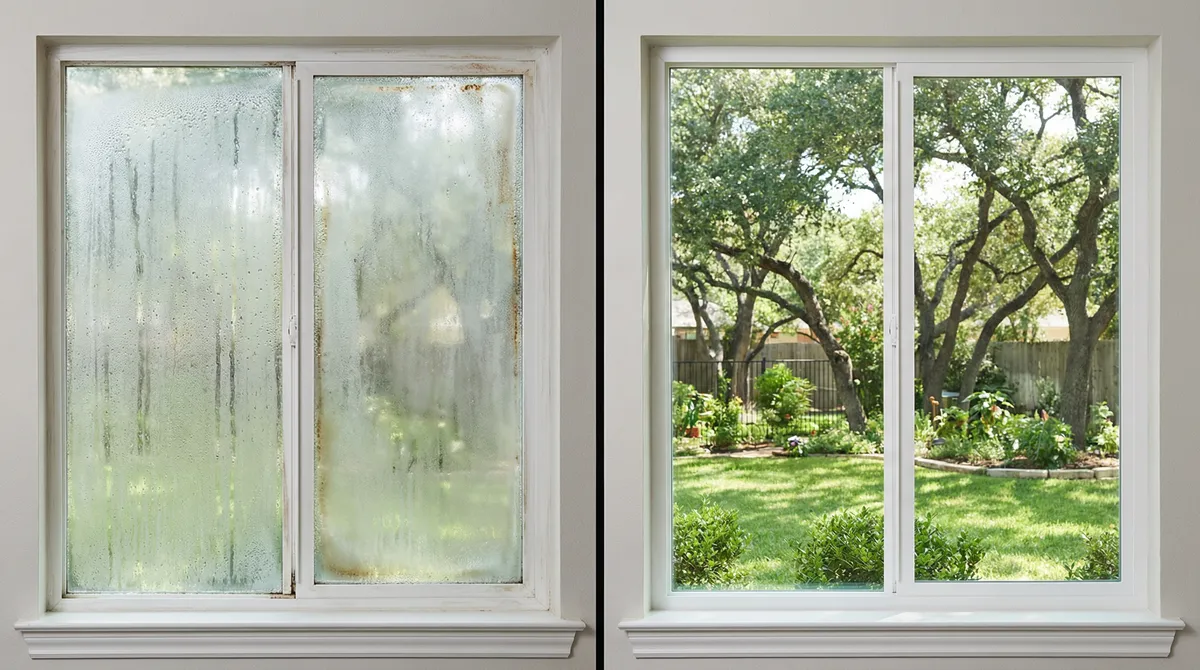
I have spent enough years working with windows to know that foggy glass is one of the most common and frustrating problems homeowners face. You look out your double-pane window one morning and instead of a clear view of the yard, you see a hazy, milky film trapped between the panes. No amount of cleaning will fix it because the fog is inside the sealed unit. At that point, you are looking at either a repair or a full foggy glass replacement. The choice depends on several factors, and knowing the difference can save you time and money.
Foggy glass is almost always a sign of seal failure. A modern insulated glass unit, or IGU, is built with two or more panes of glass separated by a spacer and sealed around the edges. The space between the panes is filled with an insulating gas, usually Argon gas, and sometimes a low-E coating is applied to one of the glass surfaces to reflect heat. When the seal breaks, moisture-laden air creeps in, meets the cooler interior surface, and condenses. That condensation turns into fog or even droplets inside the unit. Once that happens, the insulating value of the window drops sharply, and your energy efficiency takes a hit.
Why Foggy Glass Happens
Seal failure does not happen overnight. It is a slow process driven by thermal stress. Every time the sun beats down on a window and then the temperature drops at night, the glass and the spacer expand and contract. Over years of this cycle, the window sealant can weaken, especially if the original installation was not perfect or if the window is exposed to harsh weather. In the DFW area, where summer heat is intense and winter freezes are not uncommon, thermal stress is a real factor. I have seen IGUs fail in as little as five years in some homes, while others last twenty. A lot depends on the quality of the original unit and how well it was installed.
The desiccant inside the spacer is designed to absorb any tiny amount of moisture that might be trapped during manufacturing. But once the seal is broken, the desiccant gets saturated quickly, and then the moisture has nowhere to go but onto the glass. That is when you start seeing window condensation that does not wipe off. Some people try to drill a small hole in the spacer or inject a drying agent, but those are temporary fixes that rarely restore the original clarity or insulation. In most cases, you are better off planning for a replacement.

Repair Versus Replacement
There are situations where repairing the foggy glass makes sense. If the window frame and sash are still in good shape and the glass is a standard size, a glass repair specialist can sometimes replace just the IGU while keeping the existing frame and sash. This is called IGU replacement or sash replacement, depending on the design. It costs less than a full window replacement and keeps the existing trim and exterior finish intact. For single windows with foggy glass, this is often the most practical route.
But if the foggy glass is part of a larger pattern of problems, or if the window is old and the frame is rotting, then a whole-home window approach might be better. I have been in homes where three or four windows are fogged, and the homeowner is considering replacing just the glass on each one. When you add up the labor and material costs for multiple IGU replacements, it often makes more sense to replace the entire window, especially if the frames are outdated or the seals around the frame are failing. Newer windows come with better thermal performance, low-E coatings that last longer, and stronger window warranties. In the long run, the energy savings from a properly sealed double-pane window filled with Argon gas can offset the initial cost.
For commercial glass applications, the stakes are higher. A foggy storefront window does not just look bad; it can affect the business inside by blocking natural light and making the space feel dim. In commercial settings, tempered glass is often required for safety, and the replacement process involves more coordination with building codes and safety standards. A commercial glass job might also involve larger IGUs that are heavier and more expensive to handle. In those cases, I always recommend getting a free estimate from a company that specializes in commercial glass, because the margin for error is small.
What to Look for in a Replacement
When you decide to go ahead with foggy glass replacement, there are a few things to get right. First, make sure the new IGU has a good seal and a quality desiccant. Some cheaper units use a less effective sealant that can fail again in a few years. Second, check if the glass is tempered if it is near a door, a walkway, or in a commercial building. Tempered glass is stronger and breaks into small, blunt pieces instead of sharp shards if it ever shatters. Third, consider the gas fill. Standard units use Argon gas, which is denser than air and provides better insulation. Some premium units use Krypton, but Argon is usually sufficient for most homes in the DFW climate.
Another factor is the low-E coating. This is a microscopically thin metallic layer that reflects infrared heat while letting visible light pass through. It reduces heat gain in summer and heat loss in winter. If your home has large windows facing west, a low-E coating can make a noticeable difference in cooling costs. But not all low-E coatings are the same. Some are applied to the interior surface, some to the exterior, and some are part of the glass itself. A glass repair specialist can advise on the best option for your orientation and climate.
Cost and Warranty Considerations
Pricing for foggy glass replacement varies widely. A single IGU replacement for a standard double-pane window might cost a few hundred dollars, while a full window replacement with frame and trim can run into the thousands, especially for large custom sizes. The labor involved in removing the old sash, cleaning the opening, and installing the new unit adds up. That is why it pays to get a free estimate and compare quotes. But do not choose solely on price. The cheapest bid might use inferior materials or cut corners on the seal. A good window warranty should cover seal failure for at least ten years, sometimes twenty. If a contractor will not offer a solid warranty, that is a red flag.
I have seen homeowners try to seal a foggy window themselves with silicone caulk, hoping the fog will dry out. It rarely works. The moisture inside the IGU is trapped, and even if you seal the edges perfectly from the inside, the existing condensation will stay. The only reliable fix is to remove the old IGU and install a new one. That is the core of foggy glass replacement: removing the failed unit and installing a properly sealed, gas-filled replacement that restores both clarity and insulation.
Timing the Replacement
If you have just one window with foggy glass, you can wait a while before replacing it. The window will still open and close, and the frame will not rot from the moisture because the condensation is inside the sealed unit, not on the wood. But if you have multiple windows with seal failure, the energy loss adds up. A fogged window loses most of its insulating value, which means your HVAC system works harder. In the hot DFW summers, that extra load shows up on your electric bill.

I usually tell homeowners to prioritize windows that face south or west, because those get the most sun and thermal stress. Replacing those first can give the biggest improvement in comfort and energy efficiency. For north-facing windows that are shaded, you can often delay the replacement without much penalty. But if the foggy glass is in a commercial storefront or a rental property, the visual impact is immediate, and the replacement should happen as soon as possible.
Ultimately, foggy glass replacement is a straightforward solution to a problem that does not go away on its own. Whether you choose a single IGU replacement or a whole-home window upgrade, the goal is the same: clear views, good insulation, and a sealed unit that lasts. A good glass repair specialist can walk you through the options, explain the trade-offs between cost and durability, and give you a realistic timeline. Do not let the fog sit. Once you see it, you will see it every time you look out that window. Better to fix it and forget it.